Showing posts with label Science fiction. Show all posts

Friday, July 26, 2019

The Steampunk MEGAPACK: 26 Modern and Classic Steampunk Stories


The Steampunk MEGAPACK: 26 Modern and Classic Steampunk Stories has an impressive amount of reading matter for the low low price of just 99 cents. I am currently reading story 7 of 26. Already I have forgotten some of them. So, I thought I'd build out my blog post from here with what I remember of what I've already read. What's in The Steampunk MEGAPACK: 26 Modern and Classic Steampunk Stories? It is a mixture of classic and modern. At least thus far, the longer pieces are classic and in the public domain (for instance, the novella "The Whisperer in the Darkness" by H. P. Lovecraft) while the modern pieces, thus far, are short stories.

I will skip "Midnight at Valdosta's" and "The Case of the Peculiar Safe." I do remember a few things about "Midnight at Valdosta's." But I didn't really get the sense of a story out of it. It was more of an impression of something. Like it's a piece of a story or just the beginning of one.

The Acquisition of Mandrakes and Assistants, Jillian Venters

"The Acquisition of Mandrakes and Assistants" by Jillian Venters was the first remarkable story that I ran into.

The assistant is tired of the tiresome professor, and decides to try on a different occupation: taking care of a child. That child happens to belong to a twisted many who enjoys tormenting children. She rescues the boy, burns down the house with everyone locked inside, and goes back to work as an assistant. I really enjoyed this story.


The Whisperer in Darkness, H. P. Lovecraft

"The Whisperer in Darkness" is, as already mentioned, a novella by H. P. Lovecraft. H. P. Lovecraft is a writer whom I've always wanted to like ever since I heard his name mentioned by one of my favorite pulp fiction writers, Robert E. Howard, famous for his Conan stories. Even when I was younger, I found my eyes very nearly bleeding with effort to maintain attention to his books. I am no different now. I am perhaps more disciplined. But I really had to prop open my eyes to keep going. I have since discovered he was a horrible person as a racist. So, I'm not as motivated as before to like his work. What I like about his work is the mythology that he creates. The ideas about extra terrestrials and old dark magic and science from the cold planet, Pluto, are pretty great. There have been many who have brought to life his ideas through their artwork. But the writing itself is onerous.

Most of the story centers around a character, Albert N. Wilmarth, an assistant professor of English at a university. He's made a penpal of Henry Akeley, who lives in a house on the edge of an area haunted by creatures from this planet of advanced and sinister aliens. He has recordings, photographs, and anecdotes about the creatures sent to him. The sinister aliens repress knowledge of their presence through terror and alliances with humans who assist them. At last, Henry Akeley is compromised. He invites Wilmarth to his abode, but also to bring all of the material he had sent including the audio recording, the photos, and even the letters that had been sent. Clearly, at this point, there is a problem. But Wilmarth follows the instructions and all the materials are lost when he flees the house the first night of his visit. I guess it's not a bad story. But I just cannot get into H. P. Lovecraft's method of telling his tale. It is boring. He is entirely too much 'tell' and not enough 'show' when it comes to storytelling.

Wikipedia writes, "In addition to being a textbook example of Lovecraft's characteristically non-occult brand of horror, in an age when the genre consisted almost entirely of ghosts, vampires, goblins, and similar traditional tales, "Whisperer" is one of the earliest literary appearances of the now-cliché concept of an isolated brain (although the alien brain case is not transparent as with later cinematic examples of this trope).

"The story retains some seemingly supernatural elements, such as its claim that the alien fungi, although visible to the naked eye and physically tangible, do not register on photographic plates and instead produce an image of the background absent the creature (an impossibility by any known laws of optics, though a trait commonly attributed to vampires), although the story does mention that this is possibly due to the creatures' fungoid and alien structure which works differently from any known physical organism. It is stated that the electrons of these fungoid aliens possess a different vibrational frequency that would require the development of a novel technique by a chemist in order to record their image."

So, that's the issue with Lovecraft. His work is of a pioneering nature. So, it is important. The ideas are in fact very good. But as a storyteller, I just have a horrible time with the style of the stories. I ought to point out that the style does seem cliche with his period. But who sets the cliche? Was it really his fault? That story construction of, "Here's an unbelievable story. I'm very smart and educated. I didn't believe it at first. But then..." is so tired and uninteresting. And constantly, "on the verge of terror from ..." isn't much better.

The Brass Goggle Factory Worker, John Leavitt

"The Brass Goggle Factory Worker" by John Leavitt was quite interesting. It is flawed due to some poor editing and proofreading. There are many grammar, spelling, and wrong word errors to this tale throughout. At times it is distracting and outright annoying. But inside the story itself is quite interesting.

This story could have taken place somewhere inside the universe of George Orwell's legendary dystopian masterpiece, 1984. It doesn't have that depth. There isn't quite the cold chill horror or brilliance of Orwell's masterpiece. But it's just a short story.

The Tailed Men, Arthur O Friel

"The Tailed Men" is set in the Amazon Forest. A white man is tortured before being returned to his friends. His friends decide to go back into the forest to get revenge against the race. Quite beyond belief, they are able to find the very tribe responsible for his death and the enact their revenge by dressing up as a monster and slaughtering the men and women and setting the village to fire. In their murderous frenzy, they discover that the tribe possibly mates with the local monkeys, resulting in these crossbreeds of half men half monkeys from which the men with tails are concocted.

I have a hard time understanding the connection between steampunk and this particular story.

The Impossible Mister Lapin, Peter Wordworth

I have no idea who Peter Wordworth is. And, for at least the first few page results from Google, nor does Google. I enjoyed this story.

A man pursues mad science in an effort to learn how to turn himself into a rabbit. By doing his research, he is able to discover the secret. In so doing, learning the secret language of the magical universe, he becomes half rabbit and half man. Why not?

With his newfound expertise in the occult, he becomes a kind of investigator into weird happenings. For awhile, this means uncovering silly attempts or deceptions, until another less successful than himself accidentally transforms himself into a gold statue and brings to life a gold statue into a boar which terrorizes locals. He is able to solve the mystery and stop the boar using symbols.

It was a fun short story. I don't know anything else about Wordworth.

The War Effort, Austin H. Williams

Austin H. Williams gets results on Google. He has a number of stories in these types of anthologies and some kind of fiction magazine called Steampunk Tales. So, he's gotten his work around a bit.

A great warrior, Timo Malthusset, falls in love with a woman in a religious order. He dedicates himself to her and follows her, completely ignorant about the religious order, called the Messengers, to which he is devoting himself.

She leads him to an underground world where he is promptly knocked unconscious and turned into a half man half machine under the control of some kind of crystal embedded in his skull. He discovers that his beloved lady is a cannibal and that the religion is some kind of super advanced super sadistic culture which eats the bodies of the dead and has a small army of half men half machine slaves. He is able to wiggle himself into falling to the ground, smashing the crystals on his head on impact(I guess that no helmet or some kind of protective casing design never occurred to the designer). Now he is a super powerful half man half machine who goes about killing the engineer, Garum, and the woman whom he had dedicated himself before running away.

Ok, it wasn't so bad. But Williams could have done more with the story. Perhaps he is.


Herbert West: Reanimator, H. P. Lovecraft

For the first time, I have found a story by Lovecraft that I enjoyed. It was fairly well written. It's the story of a mad scientist and his sidekick who are on a mission to reanimate a corpse. It isn't terribly unlike Shelley's Frankenstein. Though, instead of reanimating the dead with electricity, a freshly made corpse without too much decay is chemically reanimated.

The mad scientist sub genre is one of endless amusement. Frankenstein, Dr. Moreau, and Dr. Jekyll, are all very interesting characters. Dr. West is nowhere near as famous as those others, but he is definitely within their ranks, albeit less infamous.

Dr. West succeeds in his quest. For the most part, he is able to destroy what he creates. But in the end, those whom he failed to destroy end up forming a small troop who literally tear him to pieces. There really isn't much to this story. But it is enjoyable. As I read the story late at night, I felt entertained from the first to the last page. Finally, a Lovecraft story I enjoyed.


A Connecticut Yankee in King Arthur's Court, Mark Twain

Mark Twain is definitely among my favorite American writers of that century. I have read at least four of his novels as well as a collection of short stories.

I don't think I would have ever read this novel if not for the fact that it was in this compilation of so called 'steampunk' books. I keep having to go back to the definition of steampunk to see how it fits in. Well, it's a book about late 19th century technology and philosophy going back to around 6th century England. Fortunately, everyone speaks modern English in this story.

Mark Twain's description of the time is a bit of a mix between the impossible and reality. Magic does not exist, though people believe in it. Superstition is ever more powerful in his rendition of the 6th century. People believe in absurd stories quite easily.

The main character, Hank, mysteriously gets whisked to King Arthur's period and is quickly captured by a knight. His knowledge of an imminent total eclipse is enough so that he makes people believe that he has caused the eclipse, and that it is not just a natural phenomenon.

He is also fairly rational, which gives him advantages over the local population. When he has to face off with the magical Merlin, it becomes apparent that Merlin is a fraud. He has no power at all. He only pretends about magic. So, it is easy for Hank, a man of some science and engineering, to make people believe that he is powerful in a magical sense. What is magic but an appearance of the impossible?

Eventually, he manages to manufacture a number of technologies. Everything from gunpowder to laying down some telecommunications. He is able to set up quite a bit. Much of his criticism of Arthur's day I find is relevant today. He talks about how classes are treated differently. While the punitive punishments are certainly not the same today as they were in his America, let alone 6th Century 'England'. For instance, he talks about how a rich or titled lord can basically kill a man or woman without any issue, a poor person so much as scratching a rich man is risking a quick death or a slow lingering death in a horrible prison. These extremes don't exist today, but there are similarities. For instance, scratch a Ferrari on the road, and the cost of the repair will be greater than a  poor person's car. If the man in the Ferrari kills someone and it's their fault, the insurance will pay for it and life will go on for the most part.

There is an interesting tug of war between reason and superstition. Eventually, superstition wins. While Hank is away in France, the whole of England falls apart due to war, and the Dark Ages church takes over. There is a war where many knights die, but it is a war between tens of thousands of knights vs a small band of boys. The battle is largely won, but when Hank goes out to see if he can help some of the dead, he is injured. Further, the sickness which comes with war, of all the decomposing bodies, eventually overwhelms his resistance. The Dark Ages take over the Age of Enlightenment which he tries to ushur in. Surely, there is some similarity between my contemporary society. In these days, there is a huge growth in strength among those who don't believe in science and those who do. Hank believes that once people are educated, it will overwhelm those who cling to ignorance. At some point in our current, recent history, surely we have felt the same way. But the tide is shifting to that of ignorance once again: people don't believe in 5+/- earth, or the round earth, or climate change, or any of these things which are well established by experts. They would rather believe an old book.Will we ever change? Or will this tug of war between reason and superstition always exist?


The Unparalleled Adventure of One Hans Pfaal, by Edgar Allan Poe

"The Raven" and a few other of Poe's poems are some of my favorite pieces of writing. While I like some of his short stories, there's nothing to equal "The Raven" in my opinion. Of the stories of his that I've read, this was among my least favorite. I am not even sure if he wrote it. In fact, it seems like someone else wrote it and he's commenting on it. However, it's possible that he wrote it to be a hoax and then treated it as a hoax itself. It's something of an ironic approach.

This isn't the first story of its kind that I've read, nor is it the best. I much preferred Cyrano de Bergerac's story, "Comical History of the States and Empires of the Moon," which is similar in many ways.


The Lost World, Sir Arthur Conan Doyle

It's funny, to look at the cover of this book because in the story, the only white woman is the girlfriend of the narrator, Edward Malone, before he goes off on his adventure to the lost world. Also, there is no T-Rex. The worst creatures they run into are giant toads which hop on their victims with their larger than elephant sized asses, squishing them to death. Way to go book cover illustrator with your horribly inaccurate portrayal!

Edward Malone is in love with a woman who wants a hero for a husband. So, he goes off on this adventure with some professors and an adventurer to see if Professor Challenger's description of this lost world was true and accurate.

The geography is a bit of a puzzle to me. There seems to be a rather significant land barrier between this lost world and the rest of the world. First, they manage to get across due to a tree being close to a rift. Once that tree is gone, they don't know how to build a tree to get back across. Of course, that's quite amazing considering that there are supposed to be two very intelligent academics, one adventurer, and the reporter/narrator. I suppose that they have no engineering ideas among them to help them escape.

Over a period of time, they discover the pterodactyls, a stegosaurus, a gigantic toad, Iguanodon, Allosaurus, and Megalosaurus, and some other prehistoric animals. They get attacked by a tribe of missing link human-like apes, but manage to escape with some red skinned Indians (Native Americans).

Racism: as is often the case, this book has a few moments. The one black character is a 'black Hercules, as willing as any horse, and about as intelligent.' I do believe that he's paying the character compliments in his mind. But it's certainly not at all a compliment.

There are two 'half breeds' which are described. One of whom is said to have 'the vice of curiosity.' However, later on, that same vice is described as 'the bravery of the scientific mind... It is decreed by a merciful Nature that the human brain cannot think of two things simultaneously, so that if it be steeped in curiosity as to science it has no room for merely personal considerations.' That is to say, the curiosity of the 'half breed' is a vice, but in the white men, it's celebrated and makes them brave. Oddly enough, there are not many pages to separate the seemingly obvious contradiction. Later on, the 'red Indians' are also poorly described. Fortunately, the racism in these  descriptions is limited to a few pages only.

I did enjoy the book, despite the silliness and racism.

The Man Who Was Thursday, G. K. Chesterton


I had wanted to enjoy this story. Surely it is meant to be a comedy. It is about a bunch of policemen who are recruited to infiltrate an anarchists' group. Ironically, the man who recruits all of them is the leader of the group, and all of the members of the anarchists' group are policemen.

I think that the story is meant to be a comedy. Perhaps I did laugh. But I'm not really sure. I was disappointed with the story. 

Wednesday, October 3, 2018

The Hitchhiker's Guide to the Galaxy, Douglas Adams


This book has been on my to-read list for decades. I am not sure why I thought it was a long novel. I dimly recall my cousin reading it and it being a brick. Perhaps his edition contained the whole series. In any case, this version that I read was more of a novella.

Apparently it was originally a radio show. What happened to radio shows like this? Do they still do this sort of thing?

The story follows an uninteresting and unintelligent who happens to be drinking buddies with an alien who has been stranded on earth for awhile. Earth is scheduled for demolition, and the alien aware of what's about to happen, decides to bring his drinking buddy with him onboard the ship. Unfortunately, they are not appreciated by the captain and are ejected out of the airlock. Fortunately, they happen to get picked up by an improbability ship on its way to rediscover a kind of El Dorado planet.

There, the reason why earth was created is revealed: it is in fact a computer created to reveal the question that goes to the answer of life which is 42. The earth is created by a mice and humans are important in solving the riddle. When the mice discover that a human being is saved from the planet, they seek to extract his brain to see if they can discover the answer that they've been looking for. Ultimately he escapes.

This book is funny. It's like Monty Python meets science fiction. They did a movie, apparently. What a shame they didn't get Terry Gilliam to do it justice. But maybe I'm selling it short: I haven't even seen it!

My favorite quote would be, "The President is very much a figurehead - he wields no real power whatsoever. He is apparently chosen by the government, but the qualities he is required to display are not those of leadership but those of finely judged outrage. For this reason the President is always a controversial choice, always an infuriating but fascinating character. His job is not to wield power but to draw attention away from it." It's definitely food for thought.

Thursday, May 24, 2018

The King of the City, Keith Laumer


   When I was much younger, Keith Laumer was a favorite of mine. His tales move fast, there's plenty of action, and it's science fiction. An excellent cocktail to hold my interest in those days. I was curious to see how I would like his work at this point in my life. "The King of the City" is a short fiction. I have read it before. You can find it for free at www.gutenberg.org.
   In fact, I feel like I've read it several times before. It's the story set in a world where order has crumbled and a struggle for power in the vacuum is taking place. The main character is a driver who takes a man deep into the city. He has to fight through roadblocks and mafia like characters to get to the heart of the city wherein the city's kingpin exercises his power.
   It turns out that the fare was an admiral in the previous administration's military arm while the driver was also of the military. They are looking for fuel for their ships, and the kingpin has his stash.
   This is a fun little short story.

Monday, April 2, 2018

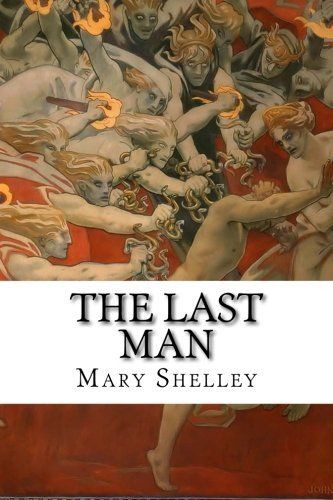
The Last Man, Mary Shelley


   I have a tremendous amount of respect for Mary Shelley. While there are arguments and evidence to state that she was not, ultimately, the original founder of science fiction, there are none who argue that she is not the first to write one natively in English. Further, her novel might be construed as the earliest science fiction work still in print today. The other thing that is rather outstanding about the author is that she was an early feminist. One might not see that in either of her novels. Neither of them feature a prominent or particularly strong, or even important, female character.
   The story itself is true to the title, as far as the narrator knows. He is the last man. How this was brought on exactly isn't exactly known. It rises from the defeat of some Muslims in Constantinople. Were they the creators of their own destruction, or did they merely see it coming? They were not the only ones, as the conqueror himself felt the ominous fate breathing at his back. Though, he would not face the plague, he would be crushed by the wreckage caused by an explosion, he thought plague would bring about his end.
   How exactly this plague was brought about is an unsolvable mystery. However, there are a few suggestions. When a ship lands on England's shore from America, there were "strange sights ... averred to be seen at night, walking the deck, and hanging on the masts and shrouds." But the next passage which describes the cause has given me a great deal of thought concerning Shelley, and has perhaps damaged my remembrance of her forever when the narrator saw "...a negro half clad, writhing under the agony of disease, while he held me with a convulsive grasp... he wound his naked festering arms round me, his face was close to mine, and his breath, death-laden, entered my vitals." I don't know if these were supposed to be demons or a representation of disease, but obviously it instigates heavy suspicion that Shelley, for all of her good qualities, was a racist. It isn't quite as painful as reading The Deerslayer so recently where racist ramblings were frequent and severe. It's also not absolute, as there might be some other meaning that I cannot penetrate. But, whatever excuse I make for it seems like a thin veil.
   Some other things that gave me trouble was the hard romance or romanticism of the novel. The characters are overly good in a way that I find distasteful and boring. Their feelings of pure love were difficult to get through. There were so many pages of them that I had almost set down the book to never return. It wasn't until I read a partial review that I decided to go back to finish what I had started.
   There is also this notion of having read about a whole life. This story starts with the narrator as a boy and follows until the year 2100. This, of course, means that the story was set in the not so distant future (though I will probably be extinct myself by the time that number is the calendar of 'now').
   It is easy to poke holes through the naiveté of Shelley: there are horses, no machines. There are no cell phones. There are no technologies that one might associate with a science-fiction story. There is only a plague far from Shelley's lifetime.
   The plague kills everyone, except for those closest to him. Those two he loses to a storm at sea. Then, he is utterly alone save for a sheep dog.
   One noticeable absence is that Shelley fails to consider that in a Europe without men, the populations of predators would rise, and quickly. Bears, boar, and wolves would quickly become major problems to survivors. Though, they are never seen. Even lions would return to Europe if humanity were suddenly gone.
   Despite its failings and despite my dislike for some of the sentimentality that became tedious for me, her craftsmanship on this novel is at times quite amazing and by far more masterful than her Frankenstein. As some have said, this novel was 'a forgotten treasure.'

Thursday, September 29, 2016

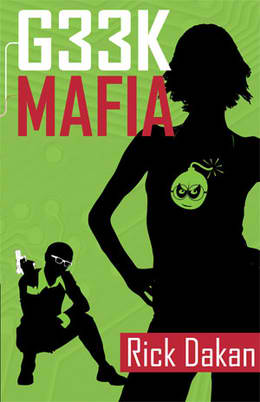
Geek Mafia, Rick Dakan

Geek Mafia (2006) is a book by Rick Dakan. It is available for free on feedbooks.com.

The setting is a decade ago. Computers at that time had reached maturity. High speed Internet was in its infancy. There is a mafia in San Jose, California, whose mission is to steal using the tools at their disposal: technology of the day, via hacking and other methods.

The main character, Paul Reynolds, was fired from a company whose existence was his brainchild and creation. The company, getting close to making his brainchild into a successful game is on the verge of making serious money, and choose that moment to force him out. As such, he's been made by a group of hackers who decide to con the company and himself out of a big payout.

It succeeds, and they manage to squeeze $850,000 out of the company through blackmail and extortion. That might have been enough for Paul to live on for a long time. But he's gotten a taste for Chloe, and Chloe has gotten a taste for Paul. He loves the life that she brings him into.

However, Raff, one of her crew, feels betrayed by the fact that Chloe falls for Paul and she attempts to let him off with his money (although perhaps this was inadvertent, as is later revealed by some failure to track Paul as he found a place to stash it). He tries to join the crew and helps orchestrate a few cons, the last of which makes him wanted by the FBI. It was a set up from the inside which unravels the last and nearly costs him his life.

The narration is pretty decent for a free modern novel. Rick Dakan has skill. The novel is hindered, however, by many mistakes which could have been corrected by a decent proofreader. The worst mistake was one chapter that ended abruptly and reprinted previous chapters. It did not usually detract too much from the story. However, it would have been much better without all of the mistakes.

Frankenstein; or the Modern Prometheus, Mary Shelley

Mary Shelly is a pioneer and legendary writer. Some argue that she wrote the first science fiction novel, Frankenstein. Her father was a famous writer, as was her husband. However, I think it likely that she is today the most famous of them, and her work is seminal to the great genre that is science fiction. She wrote at a time when women often used pen names to hide their femininity. I think this made her something of a feminist.

A common theme among many science fiction stories is the idea that too much science is a bad thing. While in fiction she may be the first to describe the consequences of too much science, certainly there are many real life examples in history where a scientist has suffered for his science. “... if no man allowed any pursuit whatsoever to interfere with the tranquility of his domestic affections, Greece had not been enslaved, Caesar would have spared his country, America would have been discovered more gradually, and the emperor of Mexico and Peru had not been destroyed.” However, I would lay the blame of this at the feet of religious intolerance rather than the pursuit of science. I think, rather, that science is a vehicle for significant change, and change frightens most people.

Consequence of too much study: “Every night I was oppressed by a slow fever, and I became nervous to a most painful degree; the fall of a leaf startled me, and I shunned my fellow creatures as if I had been guilty of a crime.”

A part of the narrative includes a description of superficial prejudice, which will come up several times throughout the book. For instance, “No mortal could support the horror of that countenance.”

The mad laughter of the mad scientist, “...he saw a wildness in my eyes for which he could not account, and my loud unrestrained, heartless laughter frightened and astonished him.” I can't help but wonder if Victor Frankenstein was the first mad scientist. What a brilliant invention of character Shelley created! I don't know how those critics could not recognize her genius.

The monster with no name observes a family and becomes a member without their knowledge. Through observation and study in less than a year he has aquired the ability to read, speak, and even write. One of the books which he reads is Milton's Paradise Lost, which is quite an advanced piece of literature.

He eventually seeks them to know him. But they fear him because of his appearance. He runs away and finds Frankenstein's village. He meets and kills the younger brother and frames a close servant (like family... but a kind of slave, too) who is later tried, found guilty, and then executed for his crime.

The monster demands of Victor that he build a female like him that he might love her. On the brinkin of doing so, Victor realizes that creating a female may as likely result in a new terror. Further, and more importantly, they may be able to procreate, creating a race of monsters. This is something he refuses to allow regardless of the consequences that the monster can bring about in his life.

In the beginning of the novel, the monster is only good in his thoughts. It is only through the treatment from others who judge him by his appearance that anger, rage, and the desire to do evil overtake him. Of course, his supernatural strength, intelligence, and iron will, which make him dangerous. Imagine the maturity of a toddler in the body of a creature with super human strength and intelligence. The monster's revenge is completed against his wife on their day of marriage (Victor expected the monster to kill him, not his new wife). His father dies soon after from grief.

“Let the cursed and hellish monster drink deep of agony; let him feel the despair that now torments me.” Victor says this at the burial grounds of his beloved. However, it was the monster's wish to share his agony with his creator, to which end he succeeded. Perhaps, though, the monster can never know the pain of losing loved ones since he never knew love.

Victor pursues the monster. The monster could have turned around and killed Victor, I am sure. However, this hunt is more than that: it is a torment for Victor rather than the monster. The monster writes in a note left for Victor, “Come on, my enemy; we have yet to wrestle for our lives, but many hard and miserable hours must you endure until that period shall arrive.”

Had Victor spent time with his creation in kindness, perhaps he would still have had everything. To Victor's credit, as he lays on his death bed aboard the ship, he owns to what he should have done to avoid the tragedies, “In a fit of enthusiastic madness I created a rational creature and was bound towards him, to assure, as far as was in my power, his happiness and well-being... but... my duties towards the beings of my own species had greater claims to my attention...”

In the finale of the book, Frankenstein's monster mourns his creator's death and seeks forgiveness before leaving.

Ultimately, this is a story about prejudice. Evil came not from his heart, but rather the misfortune of Frankenstein's monster's hideous artifice. What he created outwardly ugly was inwardly beautiful until perverted by the outwardly beautiful, but inwardly superficial prejudice.

The monster could have been a great man due to his super human abilities. However, he was unfortunate in being unable to find anyone.

This book is necessary reading, I think, for anyone interested in science fiction. It is hard to believe I have waited so long to finally get around to it. But, to be fair, the sentimentality of much of it is a little wearying. I read around a bit online to see what others thought of this book.

Wikipedia quotes Brian Aldiss who wrote, “(Frankenstein) should be considered the first true science fiction story because, in contrast to previous stories with fantastical elements resembling those of later science fiction, the central character 'makes a deliberate decision' and 'turns to modern experiments in the laboratory' to achieve fantastic results.'”

Regardless of her amazing achievements in this seminal work of literature, the British critic wrote, “The writer of it is , we understand, a female; this is an aggravation of that which is the prevailing fault of the novel; but if our authoress can forget the gentleness of her sex, it is no reason why we should; and we shall therefore dismiss the novel without further comment.” Few authoresses, to use the word of the critic, at that time, would dare to use their own names. Often, they chose male pen names in order to find an audience which did not judge based on the gender of the writer. For this reason, I think that Shelley is also worthy of outstanding merit for being a feminist well ahead of her time. She was the daughter and wife of two very famous writers of her time. However, while those of us deep into literary study or reading may recognize their names, Mary Shelley's character, Frankenstein, and the basic outline of that narrative, is globally well known nearly two centuries after she wrote it.

Tuesday, September 13, 2016

Security, Poul William Anderson

This is the last story of Poul William Anderson's that I downloaded from feedbooks.com. There are a few more that I didn't download yet. So there are two more to come. Poul William Anderson (1926-2001) is a brilliant science fiction writer, worthy of the acclaims and accolades that have been given to him. "Security" is another short story, well worth downloading and reading. It is available at feedbooks.com.

This short fiction has political elements that are similar to "Industrial Revolution," whose review can be found in the link provided.

America has become a tyrannical power which no longer holds to democratic elections. Those who disagree with the state are often taken into custody and never seen again. Subversive talk is treason, and being accused of treason is the same as being given a death sentence.

Dr. Lancaster is a brilliant physicist who doesn't realize the predicament that his culture is in, or the loss of individual freedoms. He is one of the masses who believes that what the government does is right and necessary.

There are rebels, and they need a good physicist who can help them develop weapons that can be made cheaply while being better than their contemporaries. They manage to trick Dr. Lancaster into believing that he is being brought out into space to develop some technology which will give the rebels this edge: a kind of way to store a great deal of energy. A super battery, in effect, which can be used for powering weapons and vehicles in a revolutionary way.

By the time he has succeeded in his project, he has begun to appreciate the community of the research lab. He isn't under constant threat of security. He doesn't have to worry about saying the wrong thing. He feels free (though I don't think that's how rebellions really work. Usually they're just a different form of tyranny). This is something that catches in him. When he returns to earth, he cannot help but start to see through government hypocrisy, the fake manufactured news, and the seed of doubt begins to grow. However, he is still content to continue on.

While he was gone to that space station where the research was taking place (why not on earth in a bunker... maybe the process required something that the vacuum of space has that a bunker doesn't. I'm not entirely certain.), a double was placed for him so that no one would know he had been abducted. This would have worked, but the project manager, Berg, had ratted on him. The government picks him up, tortures him, trying to get him to give up the secrets. At the end of the torture, he's come to realize that he's covering for the rebels, and he's still ready to die with the secrets. Berg, however, arranges to have him rescued. It was a kind of test, and he wanted him back to continue doing his work.

The story was quite enjoyable. Poul William Anderson is a really good writer who has something interesting to say, something to think about in his stories.

Eventually, someone rats on him

Monday, September 12, 2016

The Man Who Came Early, Poul William Anderson

"The Man Who Came Early" (1956) is a short story by Poul William Anderson.

"The Man Who Came Early" is one of those stories within a story. The narrator tells the story to a priest about a strange young man who came to Iceland before 1,000 AD. Somehow, he was struck by lightning which sent him from the then modern world to the very old world where Vikings were one of the great European powers.

This story is extremely well told. I really enjoyed it and highly recommend taking the time to read it. I read it from start to finish without putting it down. The style has a real charm and rhythm to it which shows how skilled Anderson can be.

Many people might suppose that by having many skills and knowledge from a modern time that they might flourish in an age a thousand years gone. However, this story does a good job at repudiating such a belief.

The young man, "Sergeant Gerald Roberts of the United States Army base on Iceland" is an engineer working for the US army. Therefore, he feels he can be an important contributor to his host (who is also the narrator of the story). However, the tools are very primitive: a hammer, a forge, and little else. He is unable to do much with these tools. He then tries to reinvent the sailboat, but it does not fit the requirements.

As time goes on, he and his host increasingly feel his worthlessness to the house and community. But it does not stop Helgi, the narrator's daughter, from falling in love with him. Another was in love with her, which sets up the fight. With an axe, and little such battle experience, he cannot win the battle. He resorts to using his firearm, which causes more problems. The family of the slain wants revenge, and he loses his host's graciousness as a result.

The family of the slain man go after him until he runs out of bullets. He then puts on a fight with the sword that they respect, but he ultimately cannot withstand their attacks and dies.

I think the premise of a modern man in an old world is a good one. Though, it is not the first effort to do so, it is well done. I definitely recommend reading it.


Industrial Revolution, Poul William Anderson

"Industrial Revolution" is a novella by the acclaimed science fiction author, Poul Anderson (1926-2001). It is available for free at www.feedbooks.com.

This novella is the story of how a corporate fledgling enterprise invested in an asteroid mining outfit. The group are referred to as 'asterites' without the capital A. Not sure why that is if they are a distinct people. The group was a part, or even the root of, the revolution. I suppose this is a nod to the Red Scare that America was undergoing in its efforts to undermine communist movements within the US.

On earth, America is going through a socialist revolution where the party in power is demanding that the government or the people ought to own everything. That includes an outfit that invested in a mining operation within Jupiter's orbit.

A naval vessel is sent out to deceive the group into thinking that a nuclear warhead was accidentally released and put the entire operation at risk. However, Blade (the protagonist) sees through the deception and jury rigs some devices to fight back. He succeeds, and the spirit of capitalism is saved.

A few things that short circuit a few points: first, when Blade threatens the captain of the vessel with his defenses, he claims that the hull of the navy vessel cannot withstand the explosion of Jupiter gas (which is supposed to be combustible. Though, of course, I don't see how that is possible) and that it doesn't have sufficient defenses against the improvised weapons. What kind of navy vessel is this that cannot defend itself against the equivalent of a bunch of rowboats? In any case, the ruse works. The mining operators are able to maintain their hold on the outfit.

This novella isn't as good as the last pieces of Anderson's that I read. I don't recommend it. But it is short.

Saturday, September 10, 2016

The Burning Bridge, Poul William Anderson

"The Burning Bridge" (1960) is the second of five available Poul William Anderson (1926-2001) ebooks available at feedbooks.com. It is a good short story and I recommend reading it.

This is the story of a long voyage from Earth to a planet called Rustum. The passengers are mostly frozen in a deep sleep due to the longevity of the voyage. The deep sleep allows for fewer fights over cabin fever. The crew take shifts so that some are able to take care of the ship and her needs while others sleep. They are political dissidents who are given the chance to live on another planet.

Earth is inferred as a dirty used up planet ravaged by war and humanity (fairly accurate description for this century as well). Rustum has been visited previously, and is described as being a kind of clean slate. The air is fresh. There are new opportunities there for the colony.

A message from earth, however, creates a conundrum for the protagonist, who is also the captain on duty. The message is that the ships are free to return to earth. The 'education decree' is the legislation that they are trying to escape. It sounds much like some kind of forced propaganda: perhaps similar to something big brother would do in George Orwell's brilliant novel, 1984, when finding people that thought outside of what was required.

Women and men are segregated during the voyage. Even married couples are not allowed to be wakened at the same time. When they have a video conference, the women must wear a veil (sounds Muslim to me) so as to not make the men horny. The men do not have a similar requirement. It is an ongoing cultural phenomena that is funny (as in sour milk, not ha-ha) to see in science fiction. Today, there are female students who have a different dress code than the boys. They cannot show a part of a bra or too much thigh in case it distracts the boys and causes problems. I suppose in the future this problem will not be solved, either. The hypocrisy remains in tact.

Another rather sexist point that is made in the story comes from the female he consults with over the conundrum of either continuing onto Rustum or returning to earth. Teresa says of how women think, and their place in making such a critical decision about their future:

"Few of them (the women) really wanted to come (to Rustum) in the first place. They did so only because their men insisted. Women are much too practical to care about a philosophy, or a frontier, or anything except their families."

The ship is close to a no return point where it would take as long to stop and turn around to return to earth as it would to continue on to Rustum. In fact, there would be little difference in time to simply go to Rustum, decide collectively who would stay or go. However, it is reasoned that they are decades away from being able to reach earth, and that changes may take place in that interim which would make everyone want to go back to Rustum. However, there is not enough fuel to change their minds again, and there might not be another chance at the voyage should governments on earth decide not to resend the ships.

Therefore, after much deliberation, Coffin decides that they are better off to go to Rustum regardless of the political situation on earth. However, he fears a mutiny should he try to force the issue. He decides to make a fake message designed to make everyone decide to continue onto Rustum. He makes a message sound like they are being compelled to return to earth, which of course would have the opposite effect. In his effort to create this tape, an officer catches him. They fight, and he forces the man into 'the vat' where he can sleep until the end of the voyage.

It's an interesting story and worth reading. Reading these science fiction stories certainly gives me an interesting view into how women were (and arguably still are) treated and perceived. I wonder if any stories out of the Golden Age of science fiction viewed women as equals or perceived a future where women would be treated as such.

Brainwave, Poul Willian Anderson

This journal entry continues from my last entry, covering the partial story called "The Escape." At the end of that ebook is written, "To Be Continued." I had to do some digging to find that it is a part of the complete work called Brainwave. I considered reposting the previous journal entry here, but decided not to at last. So, continuing from where I left off:

I do like this novel, thus far. I am roughly 1/2 way through it at this point. However, I find the consequences to everyone having great intelligence faulty. In "The Great Escape," there was some room for debate, I thought. However, at this point I find myself in thorough opposition to the points that Anderson is making.

Concerning art, the author's protaganist says,

Art, throughout history, has had a terrible tendency to decay, or to petrify into sheer imitation of the past.

Art does not suffer from this. Not every artist is a great pioneer like Picasso. But that doesn't mean that it is less artistic. Great scientists are equally rare, but the work of common scientists and engineers is still vitally important.

Scientists work hard to try to revert humankind back to its less intelligent level. Men have become lazier. They don't want to work. They would rather sit around philosophizing than working to build things. Intelligence has created a "...world of rootless intellect (which) has lost all its old dreams and loves. We want to restore humanness)."

Some people put together a ship that will return the earth to its pre-superhuman intelligence. However, their efforts are thwarted. The Hindu man who was a part of the plot says in his defense, "Are all the glories man has won in the past to go for nothing? Before he has even found God, will you turn God into a nursery tale? What have you given him in return for the splendors of his art, the creation in his hands, and the warm little pleasures when his day's work is done? You have turned him into a calculating machine, and the body and the soul can wither amidst his new equations." This suggests the idea that atheism is a product of superior intellect. I am an atheist and feel that intellect must eventually bury religion. However, I always have to keep in mind that Sir Isaac Newton, the greatest scientific and mathematical genius of the second millennium, was a Christian of a sort. I am in no way equal to him.

I have finished the novel at this point:

The story ends with Sheila joining Archie Brock and his group of animals and other intellectually challenged people to find her new life. Archie Brock is still very intelligent. But he doesn't reach beyond the necessity of survival.

The rest of humankind is ready to leave the planet and travel amongst the stars. Perhaps that is not a bad end. The great intelligence manages to overcome violence. Perhaps it manages to find a place for the advanced intelligence of humans.

I think the story is a very interesting one. It is his effort to explore the idea which is written at the end, saying, "What would happen If." What would happen if, somehow, everyone became super intelligent?

Another interesting question might be: are we doing that now? Did Anderson at least in part predict what would happen if we suddenly became more intelligent as a species? Are we doing that now?

For instance: machines are evolving to have artificially intelligent brains and vastly evolved robotics that so many jobs are being done by them. More are coming. Automated cars and transport trucks are on the horizon. Pizza delivery is already being done by drone. Inaugural farms are being run exclusively using AI and machinery. The consequence is that our current economic model means that many people are without jobs. The jobs themselves being lost are not the problem, but rather that money is printed on the basis of production, and with fewer people being involved in the production, that means there are fewer economic avenues available to workers. If we are able to evolve a monetary system based on the intrinsic value of a human life rather than, say, a barrel of oil (and print money based on the human value rather than the barrel of oil), then those people would be able to take care of themselves and enjoy the evolution: a kind of emancipation. Alas, so few people understand that economic models are based on theory and capable of being altered by governments. A majority have not yet realized the benefit of such a transition.

So, we are intellectually evolving. The machines are taking over. And these years are the pains we must endure before the benefit affects everyone.


Wednesday, September 7, 2016

The Escape, Poul William Anderson

Poul Anderson is another legendary science fiction writer who wrote during the Golden Age of science fiction. I don't recall having read any of his books before, so The Escape will be the first for me. It is freely available at Feedbooks.com.

At this point, I'm almost 3/4 the way through the novel. I think it's brilliant. It's a real work of genius. It's quickly shaping up to be the best science fiction story I've read this year. 

The book has some resemblance to George Orwell's Animal Farm. Animal Farm is the story of how some animals grow intelligence to rival their human owners, and rise up against them. However, this story takes it a step further. It's not just the animals: it's the humans, too.

There are essentially two narrative paths that Anderson writes from: a farming laborer, and a physics theorist. The farming laborer was of below average intelligence. He required some help to function, but was strong physically, honest, and important to the farm.

The amount of intelligence that everyone and everything gains is 'quadruple' of what it was.

While the premise is great, some of the assumptions seem mistaken. There is a general growing panic. The growth of intelligence has created a great deal of fear. For Brock, the laborer, the effect hasn't taken place. While the farm manager has decided to quit his job and undertake a new experience, and Joe the other laborer decides to take off, he remains on the farm. This, in spite of the fact that animals are approaching human levels of intelligence. They are able to overcome obstacles like latches. They know how to use their power to win freedom. It creates danger for him, including a near death experience with a bull. Many others, from the narration of Lewis, the physicist, are also quitting their dreary jobs that are important for survival: garbage men, for instance, no longer find their jobs interesting enough to continue their work. While this may be true, it does not mean that people would automatically cut themselves off from employment which gives them a source of income.

Another assumption that Anderson makes is that communication becomes stunted. He writes,
The conversation here was rapidly becoming a new language. The old way of speech was too slow and cumbersome, loaded with redundancies, ignrant of a thousand subtle possibilities. When your mind was of quadrupled capability, a single word, a gesture of hand, a flicker of expression, could convey whole paragraphs of grammatical English.
I believe, contrary to what Anderson is suggesting, that intelligence creates more language and more communication, not less.

However, these assumptions that greater intelligence creates such problems is not unheard of in fiction. Many Americans believe that intelligence causes problems. In fact, people graduating from universities with degrees are finding themselves without the jobs they thought they could have. There simply doesn't seem to be the jobs requiring the type of intelligence that is required to thrive in the work place. Is this a problem with intelligence and education, or is it a problem with our economy? That is a question I have been asking myself for a little while this year.

I have now finished this ebook.

At the end of this ebook there is a mob which nearly kills the physics scientist. They have gone mad and seem to have lost their wits.

The last chapter has Archie Brock, the farmer's laborer, returning home to find the pigs and bulls having taken over the farm. His dog, Joe, has nearly died. To his rescue came an elephant and some apes which understand English (isn't it funny that the increase in intelligence gives them the ability to understand English, but not the man the language of any of the animals).

I don't think that intelligence leads people into madness. I see madness as a defect of the mind, not a defect of superior intelligence. 

Warning! This book 'is to be continued.' After looking around for awhile, I have discovered that this book is only a part of the longer work, Brain Wave. I had a hard time finding it. I did not find it for free anywhere as a Kindle book. But there is a PDF available at librelib.com.

I really hate reading PDFs on the Kindle. One is forced to choose: a reasonably sized font and having to navigate through the document left to right, and then down, or put it on horizontal, which is still a bit small for my bad eyes and deal with it. I did this with Stephen King's book on writing. I will do it again for this book. But I really, really don't like it. However, I have discovered that one can convert pdf to mobi at pdftomobi.com.

Monday, September 5, 2016

Warm, Robert Sheckley

"Warm" (1953) is a very short story by Robert Sheckley (1928-2005) available for free on Feedbooks.com.

I'm not entirely sure what to make of it. It seems like the result of an acid trip. The narrator never mentions taking any kind of drugs. However, there is someone inside the narrator's head asking for help. This is the second time I've seen the theme of two people in one mind I've read today from Sheckley.

As the story progresses, the world becomes more and more surreal. His girlfriend, the people at the party, a beggar, all become little more than robots, flesh, and atoms, in a kind of deconstructive vision. At the end of the story, the narrator finds himself on his bed, dressed.

It definitely seems like some kind of LSD trip.

Reborn Again, Robert Sheckley

Robert Sheckley (1928-2005) is a well respected author of science fiction. I have read most of his free short fiction. "Reborn Again" is available freely at Feedbooks.com.

This is a story about two people or souls in a single mind and body. Ritchie has money. He needs a new body. Grelich is a bit of a philosopher who wants to end his life. Grelich's choice is something of a suicide.

However, the operation does not go according to plan. The surgeon cannot bring himself to end the life of Grelich. So, when Ritchie wakes up, he finds that the two of them are in the same mind and body together.

Initially, Ritchie doesn't want Grelich in his life. He doesn't have any negative feelings for him. He's just not happy sharing the body. Further, Grelich has a kind of control over the mind and body while Ritchie 'sits in the back seat.'

There is no attempt at fraud. It was never Grelich's intention to keep the body and inherit Ritchie's wealth. Nor is Ritchie a bad person who is happy about the thought of murdering Grelich, even if Grelich is willing to follow through with his original intention.

Ritchie is a lonely person, having some family still alive but not at all a part of his life. His parents are gone. He is introduced to Grelich's friends, whom he has a near instant fondness for. He ends up deciding that it is better to be a 'mindmate' than to be lonely. They decide to try to cohabitate together.

Sheckley is an interesting writer, without doubt. The beginning of this ebook has an introduction saying that Sheckley deserved better recognition. Perhaps this is true. Sheckley is gone, however, and I'm sure his position within the rankings of "Science Fiction and Fantasy Writers of America" is irrelevant. 

The Big Trip Up Yonder, Kurt Vonnegut

This is the second short story of Kurt Vonnegut's (1922-2007) that I have read. "The Big Trip Up Yonder" (1954) is available freely at Gutenberg.org. There are not many of his stories on Gutenberg.org, so unless I can find more of them elsewhere, this will be the last.

"The Big Trip Up Yonder" is similar in theme to his other story, "2 B R 0 2 B". Aging has been cured. Unlike "2 B R 0 2 B", no attempt at population control has been made. Growing food hasn't kept up with the population. Breakfast is "egg-type processed seaweed." The apartment is very small, but occupied by many generations. The eldest owns it, and has control over where those who live in the apartment may sleep.

The medicine that is used to stop aging is 'anti-gerasone.' To get rid of Gramps Ford, the medicine is poured down the drain. Gramps Ford catches Lou in the act, but says nothing. The next day, they discover a note with a will leaving the small apartment to them all in equal proportion. This creates a battle which " 500,000,000 delighted viewers on the Eastern Seaboard" get to see on TV.

The family members find themselves in a prison where the conditions are better than they are on the outside.

Em and Lou, in adjacent four-by-eight cells, were stretched out peacefully on their cots.
"Em," called Lou through the partition, "you got a washbasin all your own, too?"
"Sure. Washbasin, bed, light—the works. And we thought Gramps' room was something. How long has this been going on?" She held out her hand. "For the first time in forty years, hon, I haven't got the shakes—look at me!"
"Cross your fingers," said Lou. "The lawyer's going to try to get us a year."

In other words, the small prison with the cots and the wash basin give them the most space and privacy than they've ever had in Gramps Ford's small apartment.

Meanwhile, Gramps Ford is back in his apartment, all alone, and watches on the TV an anti-aging medication which will allow him to return to a youthful state. Of course, he starts to order it.

This is an awful dystopia. Of course as technology develops, humankind's ability to produce more food improves. Today there are prototypes of automated farms and gardens, while LED lights are efficient and capable of growing food. However, there will of course be limitations in the number of people who can live on the planet. But no one really knows what that number is. As technology advances, so too does the ability to expand the population. Further, if populations do explode to that degree, it may erode the natural world to the extent that it cannot sustain us in terms of atmospheric gasses (no trees). It's hard to imagine where we're headed. Also, natural disasters are fully capable of killing millions when in populated regions.

The idea of an immortal grandfather perpetually holding over his kin their pecking order within his will is quite comical. It is a dark piece of science fiction comedy.

Anyhow, it's a very short story and a good read.

Sunday, September 4, 2016

2 B R 0 2 B, Kurt Vonnegut

Kurt Vonnegut (1922-2007) is one of the important writers of the golden age of science fiction. I don't recall having read any of his books or short stories. I know him by reputation only. With "2 B R 0 2 B", which is quite short, that has changed. It is available for free at Gutenberg.org.

The setting of "2 B R 0 2 B" is a few centuries in the future. A great doctor who had cured humankind of aging is being put into a mural along with others.

Mr. Wehling has just had triplets. The consequence is that for every birth there must be a death. Since humans no longer die (except by accident, I'm sure), someone must volunteer to die so that new borns can live. Because there is just one volunteer, Wehling is told he must choose one of the triplets with other two being required to die.

Dr. Hitz is somewhat flippant concerning the prospective deaths of the other two infants, saying that thanks to population control, the one child will lead a happy life on a "happy, roomy, clean, rich planet."

China is the only country to try to tackle the problem with overpopulation. If parents have triplets, they are not required to choose one while letting the others die. On the other hand, Chinese have not cured aging. There are a few scientists out there trying to cure aging. It's my hope that they succeed.

World population today continues to explode. When will it end?

Mr. Wehling decides to murder the doctor, the nurse, and himself, so that his grandfather (who had volunteered, but doesn't want to die) and his three newborns can live.

The painter of the mural seems already profoundly unhappy with life. I can't imagine being unhappy with life if life was perpetual. But everyone is different. After witnessing the murder-suicide, he decides that he himself has had enough of life and calls the number, "2 B R 0 2 B" ("to be or not to be") to make an appointment for his own destruction.

One man's Utopia is another's Dystopia.

War of the Worlds, H. G. Wells

This is not the first time I have read this book. This might be the third time. I used to listen to the old radio show on cassette, narrated and directed by Orson Welles. The Orson Welles radio broadcast (1938) was so realistic that many people believed it to be real and panicked. I cannot begin to guess how many times I listened to that in my youth, as it was a favorite of mine. Then there is Jeff Wayne's (1978) musical which I probably listened to on cassette at least a hundred times. There was also a TV series very loosely based on The War of the Worlds (1898). I recommend all of them without reservation. I still consider The War of the Worlds to be perhaps the greatest science fiction classic of all time. H. G. Wells (1866-1946) is legendary. There are many other greats in the canon of science fiction, but he is one of the greatest pioneers of the genre along with Jules Verne. No fan of science fiction should miss reading The War of the Worlds. It's available for free at numerous locations, including Gutenberg.org.

The opening lines of the book are brilliant. It's an exceptionally well written introduction to the topic of the book: we are not alone in the solar system. There are intelligences greater than our own. We are an object of scientific curiosity:

No one would have believed in the last years of the nineteenth century that this world was being watched keenly and closely by intelligences greater than man's and yet as mortal as his own; that as men busied themselves about their various concerns they were scrutinised and studied, perhaps almost as narrowly as a man with a microscope might scrutinise the transient creatures that swarm and multiply in a drop of water. With infinite complacency men went to and fro over this globe about their little affairs, serene in their assurance of their empire over matter. It is possible that the infusoria under the microscope do the same.

We are poor keepers of our planet. But Mars is much poorer than our own, for it cannot sustain life. In those days, however, there was speculation that there might be some form of intelligent life. Certainly there were no robots being sent to scour the rocky terrain of the Martian surface. But there are certainly other planets near to our own, but as seemingly impossible to reach today as Mars may have been to his period in the late 19th century.

For centuries, England, along with several of the other powerful European powers of the day, sent out colonies to other continents hoping to settle and expand the presence of the English empire. Only in the most technologically primitive continents was this a success. The narrator describes a feeling that surely natives of other nations must have felt.

I felt the first inkling of a thing that presently grew quite clear in my mind, that oppressed me for many days, a sense of dethronement, a persuasion that I was no longer a master, but an animal among the animals, under the Martian heel. With us it would be as with them, to lurk and watch, to run and hide; the fear and empire of man had passed away.

I find Wells' ability to imagine the feelings of the very animals which are under us quite remarkable, and unique in popular fiction in his day, and still rare today.

Ultimately it is the very small organisms that defeat the Martian invasion. However, at the end of the story, the narrator is confident that the Martians can be defeated as they are vulnerable in the period when they emerge from their cocoon like vessels. Of course, the Martians might be wiser, next time, to land their craft further away from populated areas that they might build their machines without human interference. Though, they would have to come up with a defense against bacteria. 

Saturday, July 23, 2016

The Great God Pan, Arthur Machen

The Great God Pan (1894) is a novella by Arthur Machen (1863-1947). There are several sources for the text: Gutenberg.org and Manybooks.com, to name but two. There is also a Youtube.com movie available, presumably because the movie is in the public domain.

I think I found this novella when searching for famous older horror stories or weird fiction a few months back. This was one of the novellas mentioned. The reception for this novella is a bit inexplicable for me. I found the text to be dull. Yet, Stephen King is on record for saying, "Maybe the best [horror story] in the English language." I would love to inquire from him why he thinks so. What have I missed?

The article on Wikipedia.org states, "On publication it was widely denounced by the press as degenerate and horrific because of its decadent style and sexual content, although it has since garnered a reputation as a classic of horror." I didn't find it degenerate, but nor did I find it particularly decadent in style or particularly sexual. I feel like everyone has read a different story than I have. John Lane wrote, "Why should he be allowed, for the sake of a few miserable pounds, to cast into our midst these monstrous creations of his diseased brain?" Yet, how monstrous can these evil characters be? H. P. Lovecraft writes, "No one could begin to describe the cumulative suspense and ultimate horror with which every paragraph abounds." Perhaps I'm not sensitive?

It all begins with a ruthless scientist who cuts a portion of the brain that blinds people to the horrors of some underworld, so that they might see Pan. The girl upon whom this surgery is conducted becomes essentially brain dead. To take care of her, she's sent to a farmer. Though it isn't explicitly pointed out that the farmer raped her, at the end of the story it becomes evident that the accused for instigating suicides is her daughter, and there was no one else to have gotten her pregnant I imagine. Pan himself is hinted to be the impregnator, however. Both Pan and the farmer were in her life at roughly a close enough interval that either could have been the father. Further, if she had been pregnant, why was this not discovered at an earlier point? Surely it must have been intentionally hidden.

The style is clumsy, as is noted by Stephen King who wrote, "surmounts its rather clumsy prose and works its way relentlessly into the reader's terror-zone. How many sleepless nights has it caused? God knows, but a few of them were mine. I think 'Pan' is as close as the horror genre comes to a great white whale." I promise I shall not lose a night's sleep over it. I will just shake my head in wonderment over the sensation that it caused in its day and the reception it continues to receive from a writer of King's caliber.


Tuesday, July 19, 2016

Hellhounds of the Cosmos, Clifford Donald Simak

This is the third story of Clifford Donald Simak's (1904-1988) I've read. "Hellhounds of the Cosmos" (1932) wasn't nearly as good as the other two I have already read of his. There is not much to say about it. It's available freely at Gutenberg.org. It was a bit painful to read. I don't know why I read until the end. I guess I was hoping for something interesting at the end, and it really didn't take long to finish it.

Essentially, the fourth dimension is attacking the third dimension. A scientist figures out how to send people to the fourth dimension to attack the attacker. All the people who are sent fill the creature that champions for them against the other. Eventually, it wins, but the scientist is unable to bring them back. I could dig around for the names to make a better blog entry, but the story sucks. I feel like I've already wasted my time. And, I think I've read enough science fiction for a little while at least.

There's the end of the world motif; us vs. them. Maybe there's a relationship between hell and the fourth dimension. But there's little to go by to verify the statement.

The other stories were quite good. So, I will definitely have to read a few more of his stories.


Monday, July 18, 2016

The World That Couldn't Be, Clifford Donald Simak

This is the second piece, though this time a solo, of Clifford Donald Simak's (1904-1988) that I have read. I am growing impressed with his stories. "The World That Couldn't Be" (© 1958) is available freely on Gutenberg.org.

This is an action-science fiction tale, well told and an easy read. It is worth reading.

Here is the motif of the colonizer on another planet. Like many other science-fiction tales I have read, the protagonist, Gavin Duncan, is trying to grow a valuable plant called vua, which is also a medicine. A kind of animal called the Cytha has eaten it, and it's his intention to hunt it down so it doesn't eat the crop again.

The native population begs him not to hunt the animal, but he ignores their advice. They are an inferior people whom he has basically enslaved to make him rich. The natives also have a unique attribute: they are sexless. There are neither males nor females. They do not have sex to procreate.

While with Andre Norton, I got a sense of how the non-white characters are inherently inferior, with Simak that sense is that the protagonist may think this, but Simak does not. Thus, "the good and faithful hound" (ch. 3) seems the character's thoughts, and not the author's. Eventually the native tracker that he enlists to hunt the Cytha kills himself by slashing his own throat, probably in an effort to strand him at the mercy of the Cytha he tracks.

The Cytha that Gavin sets out to hunt is not like most creatures, or even monsters in fiction. It's not until the finale that Gavin understands that the creature known as Cytha is not really a single organism, but rather an assembly of lesser organisms: young Native children, predators, etc. Thus, when he shoots it in the neck, it is not dead as a whole, but rather just some parts. The composition of the creature comes out when he has gotten his ankle stuck in a tree after a storm has blown through, while Cytha has fallen into a pit. Gavin helps the Cytha out of the pit, and the Cytha helps save him from predators and rescues him from the tree which trapped him. The Cytha is described as it tries to escape its own trap--a pit dug into the ground,
It was coming all apart... the Cytha broke down into a thousand lumps of motion that scurried in the pit and tried to scramble up its side, only to fall back in tiny showers of sand... There were tiny screamers (a predator reminding me of hyena) and some donovans (an elephant sized bear/tiger) and sawmill birds and a bevy of wild-devils and something else as well. (chapter 5)
Later it is indicated that the native population that he had enlisted to help with the work on the farm are also born of this creature. Thus, the tracker killing himself rather than helping to kill the Cytha would be like a human refusing to kill a baby (albeit a baby of superhuman abilities).

After helping the Cytha out of the pit, Cytha brings Gavin back to his home. They agree to not infringe on each other: Cytha not to eat of the vua, and Gavin not to hunt Cytha. Does this Cytha speak for all the other Cytha I wonder. If this is a small one, what would the hunter do when going after a big one? This question is neither asked nor answered.

The great thing about stories like this is that they are still relevant today.